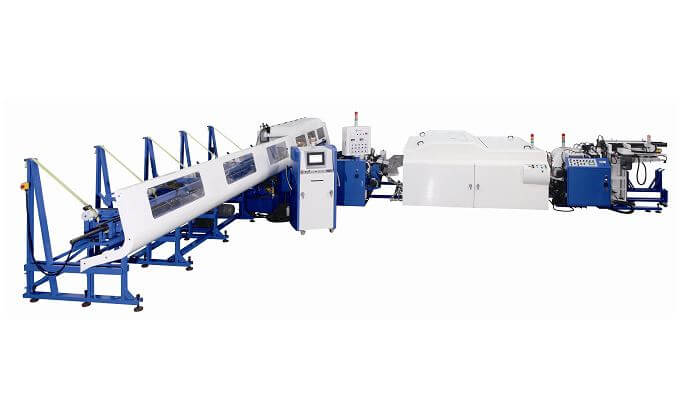
Common Misconceptions About ROI in Automation
Many businesses have misconceptions regarding the return on investment (ROI) for automation technologies, particularly in tube bending. One prevalent myth is that the initial costs of automation far outweigh the long-term benefits. In reality, while the upfront investment can be significant, the efficiency gains, reduced labor costs, and increased production capabilities often lead to substantial savings over time.
For instance, companies that have implemented tube bending automation frequently report shorter payback periods than anticipated. By analyzing real-world case studies, it becomes clear that the financial advantages, such as decreased waste and enhanced precision, can offset the initial capital expenditures much sooner than many decision-makers expect.
Real-World Applications of Tube Bending Automation
Tube bending automation is utilized across various industries, showcasing its versatility and effectiveness. From the automotive sector to aerospace, automated tube bending solutions streamline production processes and enhance product quality. Businesses are increasingly adopting these technologies to keep pace with market demands and improve their competitive edge.
For example, in the automotive industry, automated tube bending systems are employed to create complex exhaust systems and frames. This not only accelerates production timelines but also ensures that each component meets stringent quality standards, ultimately leading to greater customer satisfaction and reduced rework costs.
Future Trends in Tube Bending Automation
The landscape of tube bending automation is continuously evolving, with emerging technologies poised to reshape the industry. Innovations such as artificial intelligence and machine learning are beginning to play a significant role in optimizing bending processes, predicting maintenance needs, and enhancing overall operational efficiency.
As these technologies advance, businesses can expect improvements in predictive analytics that help forecast production outcomes, enabling more informed decision-making. Additionally, the integration of IoT (Internet of Things) devices will facilitate real-time monitoring of equipment performance, further driving efficiency and reducing downtime in tube bending operations.
Comparative Analysis: Manual vs. Automated Tube Bending
Understanding the differences between manual and automated tube bending is crucial for businesses considering an investment in automation technology. Manual bending processes often involve significant labor input and can be prone to human error, leading to inconsistencies and increased material waste.
In contrast, automated tube bending systems offer precision, repeatability, and higher production rates. By comparing key metrics such as labor costs, production speed, and error rates, companies can better appreciate the advantages of transitioning to automated solutions, ultimately making a more informed decision regarding their manufacturing processes.