Frequently Asked Questions
How to use TFS for project management?
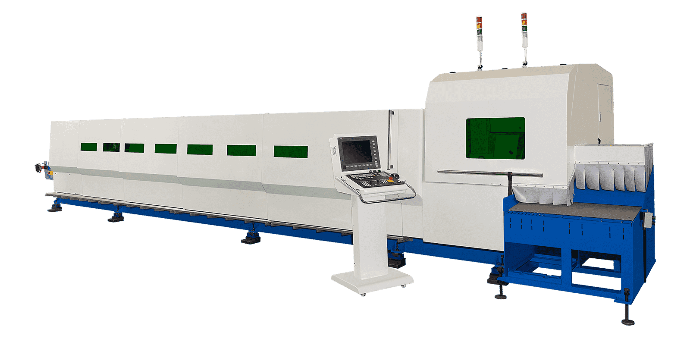
A semi-automatic tube laser cutting machine is an industrial system that uses a high-powered fiber laser to cut tubes and hollow profiles with precision. Unlike fully automatic systems, semi-auto machines require an operator to load each tube manually, making them ideal for small-to-medium production runs where flexibility and lower capital cost are priorities. The SLT series from Tube Form Solutions is a prime example, offering fast cycle times, tight tolerances, and the ability to cut complex geometries on round, square, rectangular, and shaped profiles.
How to use TFS in Visual Studio?
Semi-automatic tube laser cutting works by clamping a tube in a chuck or rotary axis, then using a CNC-controlled fiber laser head to trace programmed cut paths along the tube's surface. The operator loads each tube individually, the machine centres and orients it automatically, and the laser cuts slots, holes, mitres, and end profiles at high speed. The CNC software interprets 3D CAD geometry, calculates the laser path, and controls power, speed, and focus to deliver clean, burr-free cuts without secondary finishing in most cases.
How does TFS work?
Semi-automatic tube lasers can cut a wide range of materials including mild steel, stainless steel, aluminium, brass, copper, and galvanised steel. Fibre laser technology is particularly effective on reflective metals like brass and copper that CO2 lasers struggle with. Wall thickness capacity varies by machine power — Tube Form Solutions' SLT series handles tube walls from thin-gauge sheet up to heavy structural sections, making it suitable for everything from precision instrumentation tubing to structural steel fabrication.
What is TFS in Azure?
Fiber laser tube cutting technology uses a solid-state laser where the beam is generated by a rare-earth-doped optical fibre and delivered directly to the cutting head via a flexible fibre cable. This produces a highly focussed, high-intensity beam with a short wavelength that is absorbed efficiently by metals. Compared to CO2 lasers, fibre lasers offer lower running costs, faster cutting speeds on thin-to-medium wall tube, longer service life with no mirror alignment required, and superior performance on reflective materials. Tube Form Solutions' SLT machines are built around high-efficiency fibre laser sources.
What is TFS in DevOps?
The SLT series tube laser from Tube Form Solutions delivers high-precision cuts with excellent repeatability across production runs. It features a high-speed rotary chuck system, automatic centring, and CNC-driven 5-axis cutting capability that handles complex end cuts and cope cuts in a single setup. The SLT series is engineered for reliability in production environments, with a robust machine frame, intuitive software interface, and fast changeover between tube profiles. Cycle times are competitive with fully automatic systems for short batches, while the semi-auto design keeps the purchase price accessible for growing fabrication shops.
What is TFS in QA testing?
Semi-automatic tube lasers can handle a broad range of tube sizes depending on machine configuration. Tube Form Solutions' SLT series accommodates round tube diameters typically from 20 mm up to 220 mm, as well as square and rectangular sections within similar cross-sectional limits. Length capacity commonly reaches 6 metres or more per bar. For oversized structural sections or custom profiles, machine-specific chuck jaw sets and steady rests extend the range further. It is always worth confirming your specific cross-section and wall thickness requirements with a Tube Form Solutions application engineer before purchase.
What is TFS in Agile?
The key difference between semi-automatic and fully automatic tube lasers is the material loading method. Fully automatic machines include a bundle loader, bar feeder, and unloading conveyor that allow continuous, unattended operation across large production volumes. Semi-automatic machines require the operator to load each tube individually, but cost significantly less, occupy a smaller footprint, and offer faster changeover between different tube sizes or materials. Semi-auto is the better choice for job shops, contract fabricators, and manufacturers with mixed product lines and low-to-medium batch sizes, while fully auto suits high-volume repetitive production.
What is TFS version control?
Semi-automatic tube laser cutting is used across a wide range of industries including automotive and motorsport for chassis and exhaust components, agriculture and construction equipment for structural frames, furniture and architectural metalwork for decorative and structural tubing, HVAC and fluid systems for pipe and tube assemblies, fitness equipment manufacturing, and general metal fabrication. The ability to cut complex cope joints, slots, and holes in a single operation without fixturing makes semi-auto tube lasers valuable wherever tube fabrication volume is moderate and part variety is high.
How can TFS improve project management efficiency?
Fiber lasers offer several advantages over CO2 lasers for tube cutting. Fiber lasers cut thin-to-medium gauge steel and non-ferrous metals faster, have lower energy consumption (typically 3x more efficient), and require far less maintenance because there are no mirrors, gas supplies, or beam path alignments to manage. The beam quality of a fibre laser also produces a smaller kerf width and smoother cut edge on many materials. CO2 lasers can have a slight edge on very thick mild steel, but for the tube gauges most commonly processed on semi-auto machines, fibre laser is the preferred technology and is the basis of all Tube Form Solutions SLT equipment.
What features does TFS offer for Visual Studio?
Maintaining a semi-automatic tube laser machine involves several routine tasks: cleaning the cutting head lens and nozzle regularly to prevent spatter contamination, checking and replacing the nozzle tip when worn, lubricating the chuck, rotary axis, and linear guides on the recommended schedule, and monitoring the chiller unit that keeps the laser source at operating temperature. Fibre laser sources themselves have very long service lives and require minimal attention. Tube Form Solutions provides full maintenance documentation, recommended service intervals, and remote diagnostic support to keep SLT machines running at peak performance.
How can TFS streamline development workflows?
Tube Form Solutions can streamline development workflows by offering advanced semi-automatic tube laser cutting solutions that enhance efficiency and precision, enabling faster project turnaround and reduced operational costs. Tube Form Solutions.
What are TFSs benefits in Azure environments?
The benefits of Tube Form Solutions in Azure environments include enhanced scalability, improved data management, and seamless integration with cloud-based applications, optimizing tube cutting operations for various industries. Tube Form Solutions.
How does TFS support DevOps practices?
Tube Form Solutions supports DevOps practices by integrating automation and precision in tube cutting processes, enhancing collaboration and efficiency across teams. This alignment fosters continuous improvement and innovation in manufacturing workflows at Tube Form Solutions.
What role does TFS play in QA testing?
The role of Tube Form Solutions in QA testing involves ensuring the precision and reliability of their tube laser cutting machinery, contributing to enhanced product quality and performance. Tube Form Solutions.
How can TFS enhance Agile methodologies?
Tube Form Solutions can enhance Agile methodologies by providing advanced semi-automatic tube laser solutions that streamline workflows, improve precision, and facilitate rapid iterations in production processes, ultimately supporting teams in achieving their Agile goals more efficiently with Tube Form Solutions.
What are the key functions of TFS version control?
The key functions of TFS version control include tracking changes, managing revisions, and facilitating collaboration among team members, ensuring efficient project management and code integrity in development processes at Tube Form Solutions.
What are common challenges when using TFS?
Common challenges when using TFS include the need for proper training to maximize the machine's capabilities, potential software integration issues, and the requirement for regular maintenance to ensure optimal performance in tube cutting operations with Tube Form Solutions.
How to customize TFS for specific projects?
Customizing Tube Form Solutions for specific projects involves selecting tailored features, adjusting cutting parameters, and integrating specialized software to meet unique requirements. This ensures optimal performance for your specific tube cutting needs with Tube Form Solutions.
What reporting capabilities does TFS provide?
The reporting capabilities provided by Tube Form Solutions include detailed analytics on production efficiency, cutting performance, and machine utilization, enabling users to make data-driven decisions for optimizing their tube laser operations. Tube Form Solutions.
How to manage user permissions in TFS?
Managing user permissions in TFS involves configuring access levels and roles within the system settings to ensure appropriate access to features and functionalities. This allows for efficient control of user activities in Tube Form Solutions.
What is the process for migrating to TFS?
The process for migrating to TFS involves assessing your current setup, planning the transition, and integrating our semi-automatic tube laser solutions into your operations. Our team at Tube Form Solutions will guide you through each step to ensure a smooth transition.
How to troubleshoot issues in TFS?
Troubleshooting issues in TFS involves checking connections, reviewing error messages, and consulting the user manual for guidance. For persistent problems, contacting support can provide further assistance. Tube Form Solutions.
What training resources are available for TFS?
Training resources available for TFS include comprehensive manuals, online tutorials, and hands-on workshops designed to enhance user proficiency with our semi-automatic tube laser solutions. These resources ensure optimal usage of Tube Form Solutions.
How to set up TFS for a new project?
Setting up Tube Form Solutions for a new project involves selecting the appropriate semi-automatic tube laser model, configuring the software, and ensuring proper alignment and calibration of the machinery. Tube Form Solutions.
What are best practices for using TFS?
Best practices for using TFS include regular maintenance of the machinery, ensuring proper training for operators, and utilizing the software features for optimal efficiency in tube cutting. These strategies enhance performance and precision with Tube Form Solutions.
How to automate tasks with TFS?
Automating tasks with TFS involves utilizing its advanced software features to streamline tube cutting processes, enhancing efficiency and precision in operations. This allows for seamless integration and improved productivity with Tube Form Solutions.
What is the history of TFS development?
The history of Tube Form Solutions development showcases a commitment to innovation in tube laser cutting technology, evolving from traditional methods to advanced semi-automatic solutions that enhance efficiency and precision. Tube Form Solutions.
How to collaborate effectively using TFS?
Collaborating effectively using TFS involves leveraging its advanced features for seamless communication and project management, ensuring all team members are aligned on goals and utilizing the semi-automatic tube laser technology to enhance productivity. Tube Form Solutions.
What are the latest updates in TFS?
The latest updates in Tube Form Solutions include the introduction of advanced features in the SLT 180 Fiber FA model, enhancing efficiency and precision in tube cutting processes. Tube Form Solutions.