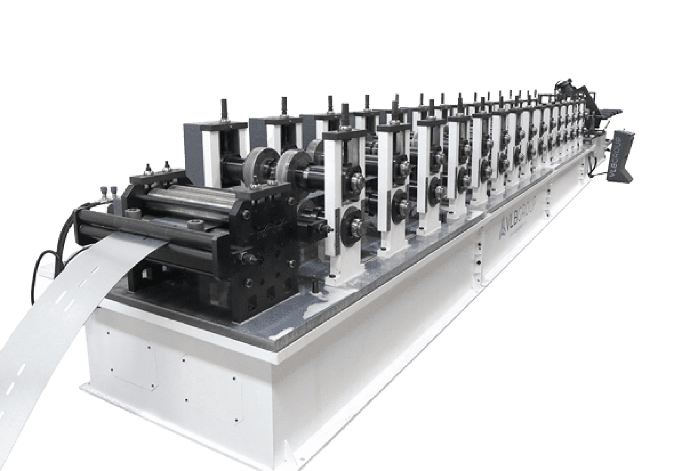
Efficient Roll Forming Lines
Tube Form Solutions offers high-quality, efficient and durable roll forming lines solution suitable for various industries, with a range of specialist roll forming machines tailored to meet all your metal shaping requirements. From very detailed product specifications to feedback by customers, Tube Form Solutions is a place for you to get top Roll Forming lines products in the market. Use our state-of-the-art equipment and get accurate results for your production line upgrade.
VLB creates, manufactures, and installs roll forming lines while also offering technical assistance. This involves experience from decades in the sheet metal processing industry which underlines how the VLB roll form machines are designed.
All automatic sheet metal bending lines have been developed with direct customer involvement and fully to comply with specifications in geometry, accuracy and stability that characterize the profiled product as well as productivity and automation requirements
We've got everything covered. Our profiling lines are designed to be future-proof, so you can always add new roller sets or modules later on. The RF series roll forming lines are super fast, accurate, and flexible, allowing you to work with sheet thicknesses ranging from 0.3mm to 12mm and sheet widths up to 1400mm.
Our VLB sheet metal roll forming machines are packed with innovative solutions that have proven themselves across a wide range of industries. Whether it's construction, logistics, automotive, agriculture, road safety, or consumer goods, these machines have got you covered.
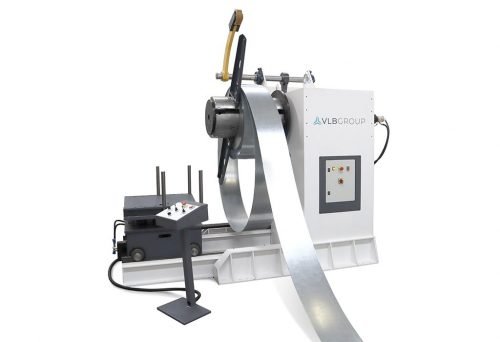
COIL UNWINDING MACHINE
So, it all begins with this awesome unwinding machine. The VLB program offers a range of options, from simple and lightweight versions to the heavy-duty ones that weigh up to 20 tons. These machines come equipped with laser sensors that can adjust their speed and a super powerful system for loading and unloading coils.
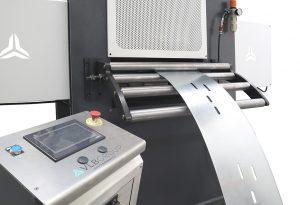
PUNCHING MACHINE
Depending on how you want the finished product to turn out, you can have a punching machine as part of the roll forming line. It can either be a compact part of the line or a separate station on its own. Either way, these machines always come with servo-controlled drives and touchscreen programming, which ensures high accuracy and speed. The tools used in these machines can be single or multiple, and they have their own pneumatic drives and CNC programming.
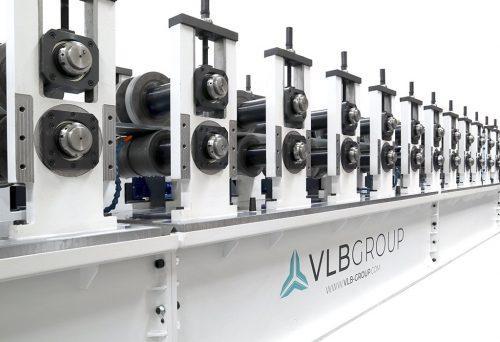
ROLL FORMING STATIONS
The roll forming lines can contain different systems depending on the application and versatility desired by the customer. These can be quick-change cassettes, adjustable tools for producing profiles of different sizes, multiple tools for producing different profiles in the same arrangement, double roller sets with shared motorization, etc.
CUTTING & UNLOADING PROFILES
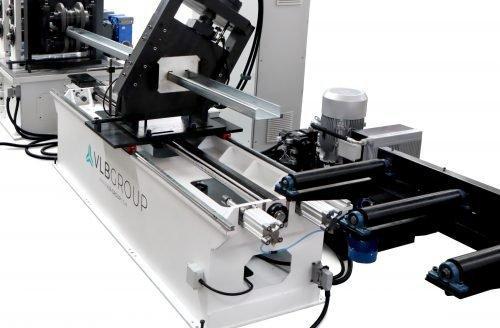
You have a couple of options when it comes to making the cut. You can use a stationary saw that stops briefly to make the cut, or you can go for a high-speed cutting station that's controlled by a fancy servo system. The second option allows you to make profiles without any stops. In that case, you'll need to use our automatic unloading system. With this system, you can make straight cuts without any waste, as well as cuts at different angles.
We've developed customer-specific unloading systems that can be tailored to your needs. For example, you can choose to have unloading on both sides, and we can even combine it with a stacking or pallet table.
CONTROL
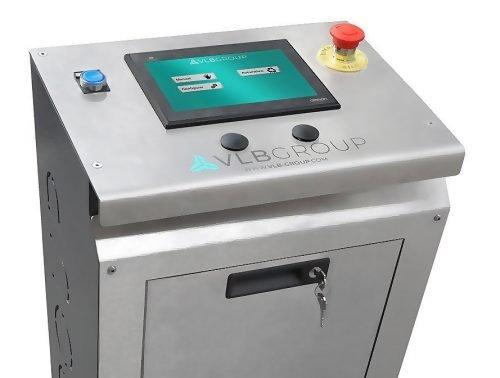
The components are seamlessly incorporated into the automatic VLB roll forming lines. Each component is controlled separately by a robust and user-friendly CNC controller. This ensures a smooth connection between every step of the process, right from the plate spool to the automatic unloading table.
PLATE WELDING UNIT
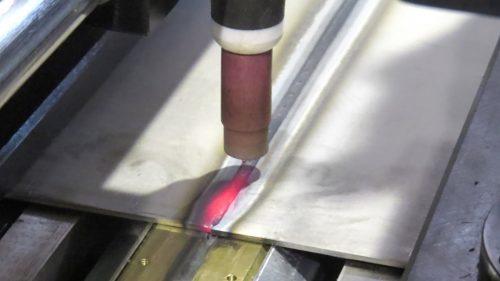
For companies that need to work quickly, this welding system is a game-changer. It automatically welds the ends of the plate on the coil, saving a ton of time when it comes to replacing the coil. Plus, it significantly reduces material waste. So, you can keep production running smoothly without wasting resources.
VERTICAL PLATE STORAGE SYSTEM
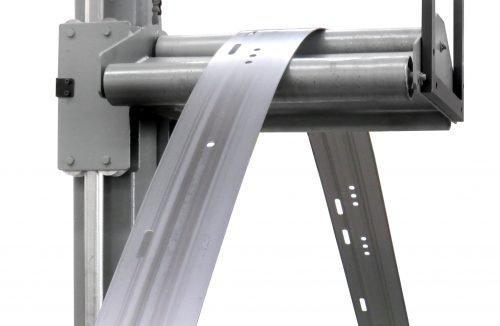
The vertical plate storage system comes in handy when you can't dig a pit on the floor. This allows the roll forming line to keep running smoothly without any interruptions.
FAQs Related to Roll Forming Lines
Well, it's basically a production system that's all about bending or forming long strips of material using sets of rolls. It's a super efficient method for shaping different profiles and getting consistent results when it comes to large-scale manufacturing.
Roll Forming Lines stand out by offering continuous and precise shaping of materials. Unlike other forming methods, they excel at producing complex profiles consistently and repeatedly, making them perfect for applications that demand high-volume output.
Our Roll Forming Lines are versatile and can process a variety of materials, including steel, aluminum, and stainless steel. The machines are adaptable to different material thicknesses and are designed for a range of industrial applications.
Absolutely. SOCO Machinery's tube benders are versatile and can be used for both small-batch production and high-volume manufacturing. The machines are known for their efficiency and reliability in various production environments.
Roll Forming Lines find common applications in industries such as automotive, construction, aerospace, and appliance manufacturing. Their ability to produce consistent and precise profiles makes them valuable tools for large-scale production.
Well, the production speed of our Roll Forming Lines can vary depending on the specific application and material being processed. For detailed information, you can either check out the specifications on our product page or get in touch with our team.
You bet! Tube Form Solutions' Roll Forming Lines are specifically designed to handle these types of applications. With our continuous and controlled forming process, you can trust that each piece will meet the required specifications with consistent accuracy. So, if you need precision and tight tolerances, our Roll Forming Lines have got you covered!
Yes, our Roll Forming Lines are customizable to meet specific industry standards and unique project requirements. We work closely with clients to tailor our machines to their precise needs, ensuring compliance with industry regulations and design specifications.
The maintenance schedule for Roll Forming Lines depends on factors such as production volume and material characteristics. We provide comprehensive guidance on maintenance procedures to ensure optimal performance and longevity of the machines.
Lease A New Roll Forming Machine
Through our financing partners, you’ll find financial programs, leasing, and loan services at very competitive rates. No Financials or Tax Returns are required* and credit decisions are usually made within 24 hours.