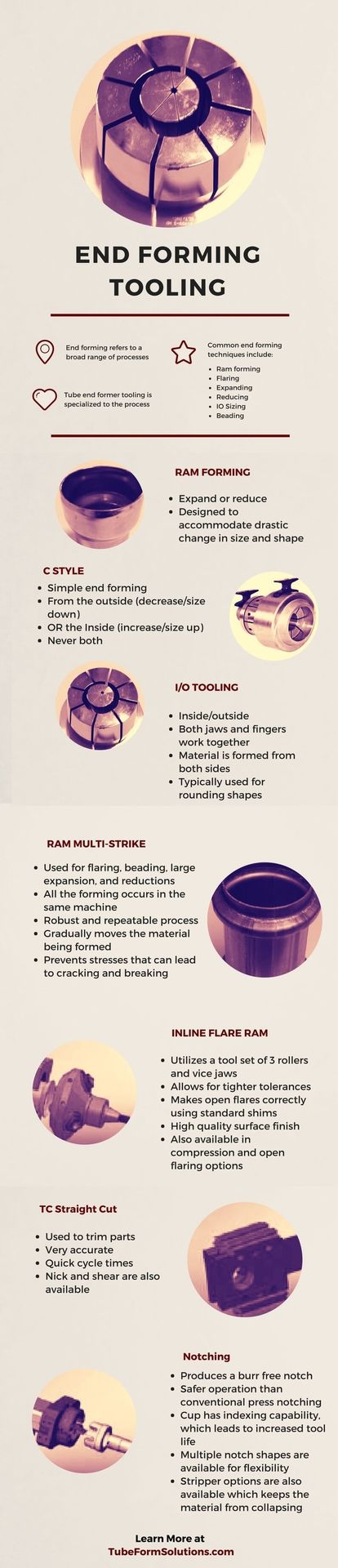
Understanding End Forming Tooling Components
End forming tooling is composed of various components that work together to shape the ends of tubes effectively. Key elements include the die, which determines the shape of the end formed, and the tooling holder, which secures the tube during the process. Understanding these components is crucial for selecting the right tooling for specific applications.
For instance, the die design can vary significantly based on the desired end shape, whether it be flared, tapered, or bulged. Each component must be compatible with the material of the tube being processed to ensure optimal results and minimize wear on the tooling.
Innovations in End Forming Technology
Recent advancements in end forming technology have led to more efficient and precise tooling solutions. Innovations such as computer numerical control (CNC) machining have enabled manufacturers to produce complex shapes with high repeatability and reduced lead times. These technologies are transforming the way end forming tooling is designed and utilized in various industries.
For example, CNC-controlled end formers can adapt to different tube materials and shapes on-the-fly, making them ideal for custom projects where flexibility is essential. This level of innovation not only enhances productivity but also improves the overall quality of the end products produced.
Maintenance Tips for End Forming Tooling
Proper maintenance of end forming tooling is critical to ensure longevity and consistent performance. Regular inspection and cleaning of the dies and holders can prevent material buildup, which can lead to defects in the finished product. Additionally, lubricating moving parts helps reduce friction and wear.
It's also advisable to follow the manufacturer's guidelines for maintenance schedules and to replace worn components promptly. By implementing these maintenance practices, businesses can minimize downtime and maintain the quality of their tube forming processes.
The Future of End Forming in Manufacturing
The future of end forming in manufacturing looks promising, with trends pointing towards increased automation and integration with other manufacturing processes. As companies seek to improve efficiency and reduce costs, end forming tooling will likely become more advanced, incorporating smart technologies that allow for real-time monitoring and adjustments.
For instance, integrating IoT technology could enable predictive maintenance, where tools can alert operators of potential issues before they lead to failures. This shift not only enhances productivity but also supports sustainable manufacturing practices by reducing waste and energy consumption.