Applications of End Forming Tools in Various Industries
End forming tools play a critical role across multiple industries, including automotive, aerospace, and HVAC. Their ability to create precise shapes and modifications on tube ends makes them invaluable for applications such as exhaust systems, structural components, and heat exchangers.
For instance, in the automotive industry, ram forming tools are essential for producing components that require specific end geometries to fit into complex assemblies. Similarly, in the aerospace sector, the precision offered by I/O end forming tools ensures that components meet stringent safety and performance standards.
Comparative Analysis of End Forming Tool Types
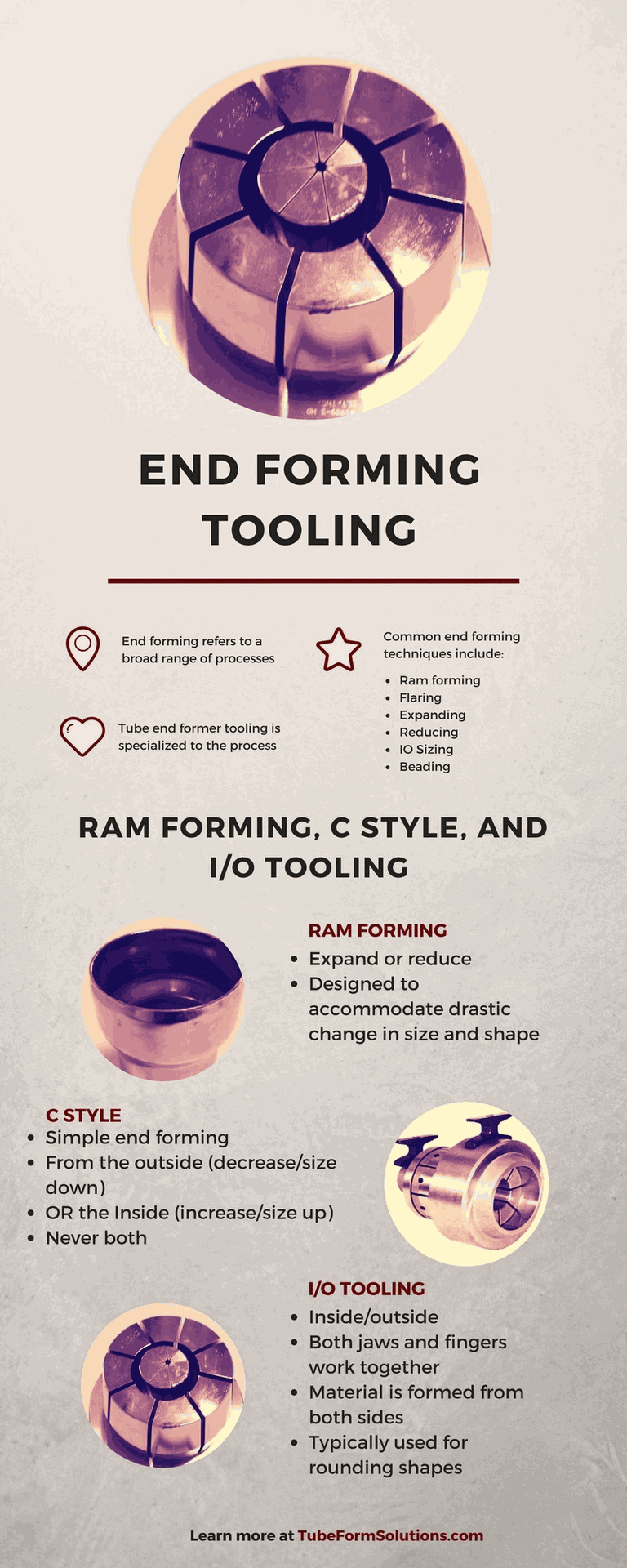
Understanding the differences between various types of end forming tools is crucial for making informed decisions in manufacturing processes. Each tool type—ram forming, C style, and I/O end forming—offers unique advantages and is suited for different applications.
For example, while ram forming tools excel in reshaping tube ends for robust applications, C style tools are preferred for their efficiency in producing consistent shapes. A comparative analysis can help manufacturers choose the right tool based on material properties, production volume, and specific design requirements.
Maintenance Tips for End Forming Tools
Proper maintenance of end forming tools is essential to ensure optimal performance and longevity. Regular inspections, cleaning, and lubrication can prevent wear and tear, which can lead to production delays and increased costs.
For instance, checking for any signs of damage or wear on the tooling edges and ensuring that they are properly cleaned after use can significantly extend the tool's lifespan. Implementing a scheduled maintenance routine can also help manufacturers avoid unexpected downtimes and maintain production efficiency.
Innovations in End Forming Technology
The field of end forming technology is continuously evolving, with innovations aimed at improving efficiency, precision, and versatility. Advances in automation and computer numerical control (CNC) systems have revolutionized how end forming processes are executed.
For example, the integration of smart technologies allows for real-time monitoring and adjustments during the forming process, leading to higher accuracy and reduced material waste. Staying updated on these innovations can help businesses remain competitive and enhance their production capabilities.