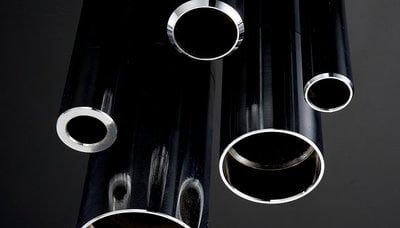
Understanding Section Modulus in Tube Bending
The section modulus is a critical property in tube bending that determines the strength and stability of a tube under bending loads. It is defined as the ratio of the moment of inertia to the distance from the neutral axis to the outermost fiber of the tube. Understanding this concept is essential for engineers and fabricators to ensure their designs can withstand operational stresses without failure.
For example, when designing a tube structure, calculating the section modulus helps in selecting the appropriate tube shape and material to meet safety and performance standards. A higher section modulus indicates a stronger tube, which is crucial for applications in construction, automotive, and aerospace industries where structural integrity is paramount.
Key Features of the Updated Section Modulus Calculator
The updated Section Modulus Calculator boasts several new features designed to enhance user experience and calculation accuracy. These features include support for a wider range of tube shapes and the ability to input various bending configurations, making it suitable for more complex projects. The interface has also been streamlined for easier navigation, allowing users to access tools quickly.
Moreover, the calculator now includes real-time error checking, which helps users identify potential mistakes before finalizing their designs. This proactive approach not only saves time but also minimizes the risks associated with manual calculations, ensuring that professionals can focus on innovative design solutions rather than troubleshooting errors.
Practical Applications of Tube Bending Calculations
Tube bending calculations have numerous practical applications across various industries, including automotive, construction, and manufacturing. By accurately calculating the section modulus and other related properties, professionals can design components that are both lightweight and strong, optimizing performance while reducing material costs.
For instance, in the automotive industry, tube bending is used in the fabrication of roll cages and chassis components. Accurate calculations ensure that these structures can withstand impacts and stresses during operation, thereby enhancing safety. Similarly, in construction, tube bending calculations play a vital role in creating frameworks that support buildings and infrastructure, ensuring durability and compliance with safety regulations.
Tips for Effective Tube Bending Design
Designing for tube bending requires careful consideration of various factors, including material selection, bending radius, and wall thickness. To achieve optimal results, it is essential to understand how these elements interact and affect the overall performance of the bent tube. Professionals should also consider the manufacturing processes involved, as they can influence the final properties of the bent tube.
Additionally, utilizing advanced software tools, such as CAD integration with the Section Modulus Calculator, can significantly improve design accuracy. These tools allow for precise modeling and simulation of tube bending scenarios, enabling designers to visualize and test their concepts before actual production. By following best practices and leveraging modern technology, professionals can enhance their tube bending designs and achieve superior outcomes in their projects.