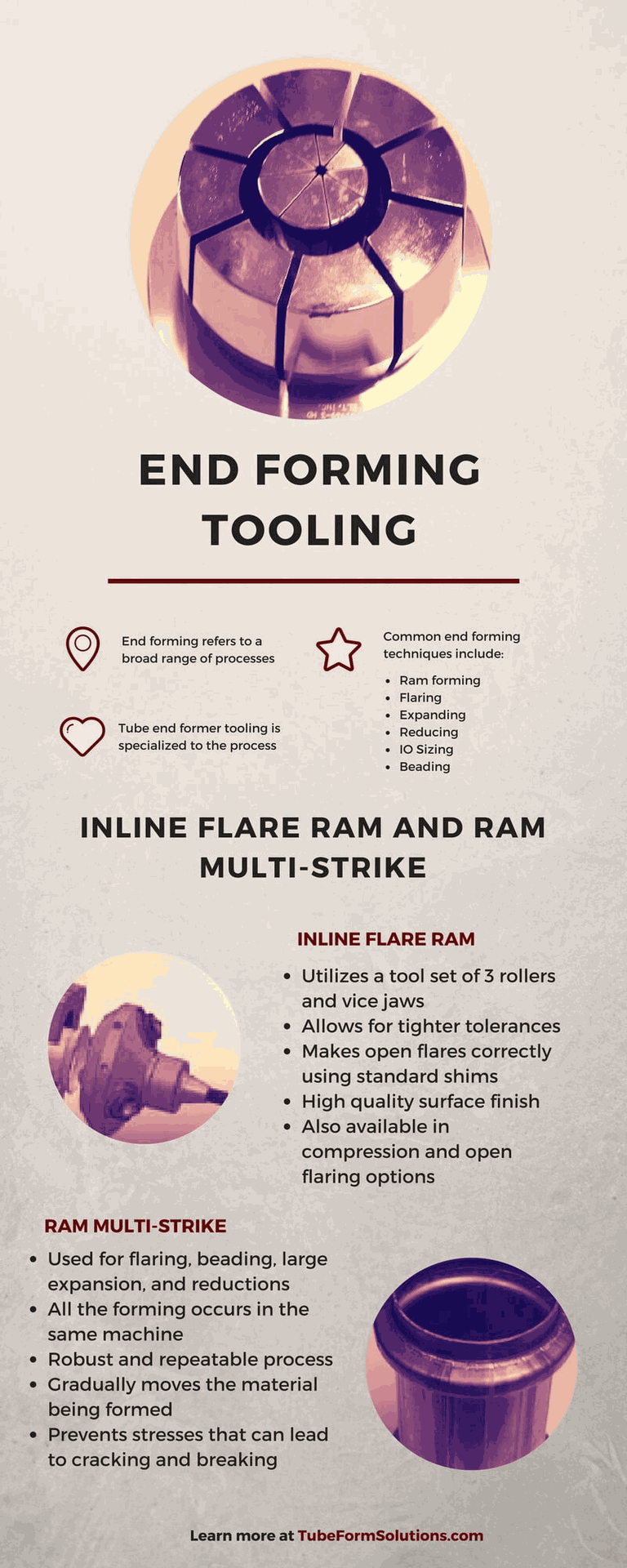
Key Features of Inline Flare Ram Tooling
Inline flare ram tooling is designed with precision and efficiency in mind, making it ideal for applications requiring consistent flaring. These tools often incorporate advanced features such as adjustable stroke lengths and pressure controls, which allow for customization based on specific tube dimensions and materials.
For example, many inline flare ram tools are equipped with quick-change tooling systems, enabling operators to switch between different sizes and shapes rapidly. This flexibility not only enhances productivity but also reduces downtime, making inline flare ram tooling a valuable asset in high-volume manufacturing environments.
Choosing the Right Tooling for Your Application
Selecting the appropriate end forming tooling is crucial for achieving optimal results in tube processing. Factors such as the type of material, tube size, and desired end shape play a significant role in determining which tooling option will best meet production needs.
For instance, if a manufacturer is working with thinner-walled tubes, inline flare ram tooling may be preferable due to its ability to create precise flares without compromising the integrity of the material. Conversely, for thicker materials or larger diameters, multi-strike ram tooling may provide the necessary force and adaptability for effective forming.
Industry Trends in Tube Forming Technology
The tube forming industry is continually evolving, with new technologies and methodologies emerging to improve efficiency and precision. Innovations such as automated tooling systems and smart technology integration are becoming increasingly common, allowing for real-time monitoring and adjustments during the forming process.
Moreover, the rise of sustainable manufacturing practices is driving the development of eco-friendly tooling options that minimize waste and energy consumption. Companies are increasingly looking for tooling solutions that not only enhance productivity but also align with their environmental goals, making it an exciting time for advancements in tube forming technology.
Common Challenges in End Forming and How to Overcome Them
End forming processes can present various challenges, including inconsistent flares, tool wear, and material deformation. Understanding these issues is essential for manufacturers to maintain high-quality production standards and minimize downtime.
To address these challenges, regular maintenance and monitoring of tooling conditions are vital. Implementing a preventive maintenance schedule can help identify wear and tear before it leads to production issues. Additionally, training operators on best practices for setup and operation can significantly reduce errors and improve overall efficiency in tube forming operations.