Benefits of Rotary Draw Bending
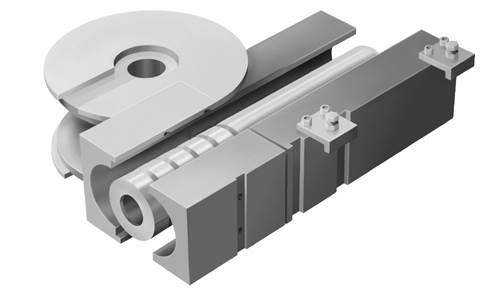
Rotary draw bending offers numerous advantages, making it a preferred choice in various industries. The technique allows for precise control over the bending process, ensuring that the final product meets strict dimensional tolerances and quality standards.
Additionally, rotary draw bending is highly efficient, capable of producing complex shapes with minimal material waste. This efficiency not only reduces costs but also enhances production speed, making it ideal for high-volume manufacturing scenarios, such as automotive and aerospace applications.
Choosing the Right Tube Material for Bending
Selecting the appropriate tube material is critical for achieving optimal results in rotary draw bending. Different materials, such as steel, aluminum, and stainless steel, exhibit varying properties that affect the bending process, including flexibility, strength, and resistance to deformation.
For instance, aluminum is often favored for its lightweight and corrosion-resistant qualities, making it suitable for applications in the automotive industry. On the other hand, steel is preferred for its strength and durability, particularly in structural applications. Understanding these material properties helps engineers make informed decisions to enhance the quality and performance of the bent tubes.
Common Challenges in Rotary Draw Bending
While rotary draw bending is a highly effective technique, it does present certain challenges that engineers must navigate. Issues such as tube wrinkling, cracking, and inconsistent bend radii can arise if the bending parameters are not carefully controlled.
To mitigate these challenges, it is essential to conduct thorough testing and adjustments during the setup process. Implementing proper tooling, adjusting the bend angle, and selecting the right material can significantly reduce the likelihood of defects, ensuring a high-quality final product that meets design specifications.
Future Trends in Tube Bending Technology
The field of tube bending technology is continuously evolving, with advancements aimed at improving efficiency, precision, and automation. Emerging technologies, such as computer numerical control (CNC) systems, are revolutionizing the way tube bending is performed, allowing for greater customization and flexibility in production.
Moreover, the integration of smart technologies and IoT (Internet of Things) in manufacturing processes is expected to enhance monitoring and control during bending operations. These innovations not only streamline production but also enable manufacturers to respond quickly to changing market demands, ensuring competitiveness in a fast-paced industry.