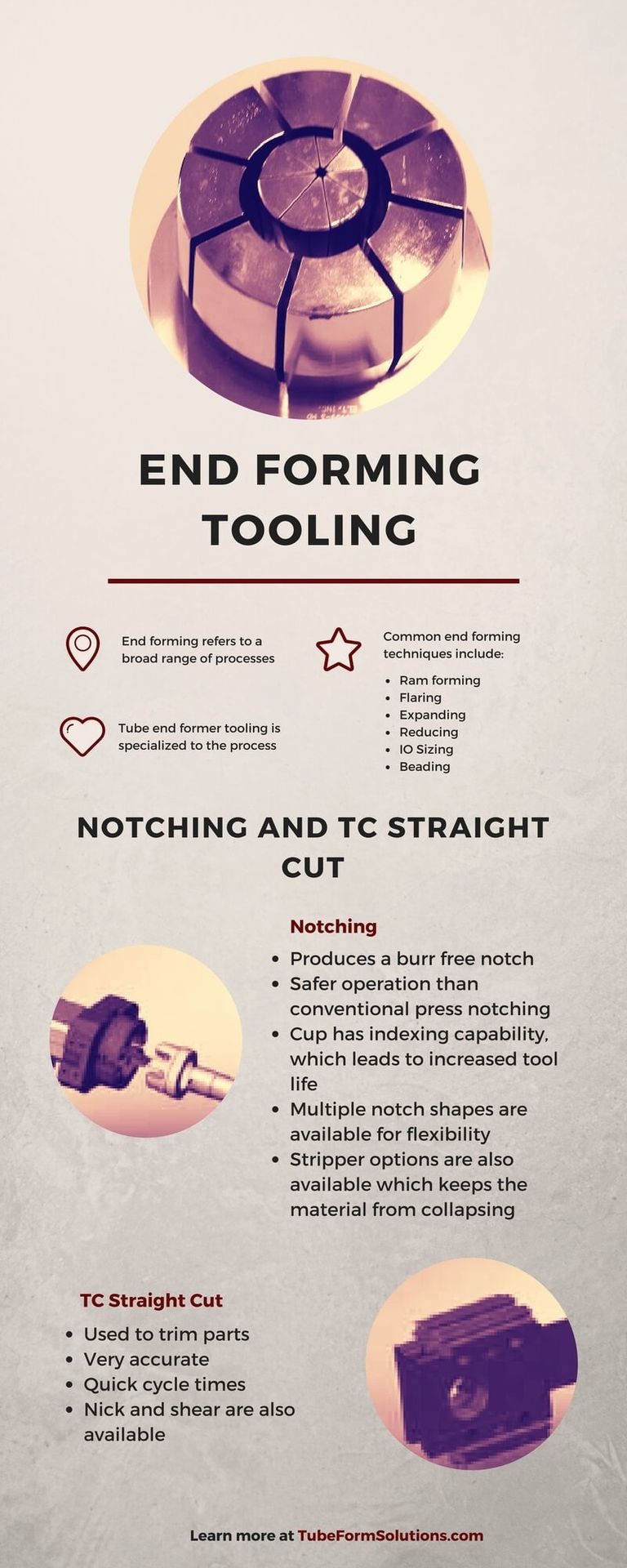
Comparative Analysis of Notching and TC Straight Cut Tools
Understanding the differences between notching and TC straight cut tools is crucial for selecting the right equipment for specific applications. Notching tools are designed to create precise cuts or indentations in the material, allowing for better joint fittings in assemblies. In contrast, TC straight cut tools are optimized for producing clean, straight edges, making them ideal for high-speed production environments.
For example, notching tools are often used in applications where tubes need to be joined at specific angles, such as in automotive frames, while TC straight cut tools excel in scenarios requiring uniformity and speed, like manufacturing large quantities of furniture components. By comparing these tools, users can make informed decisions based on their production needs and material specifications.
Maintenance Tips for End Forming Tools
Regular maintenance of end forming tools is essential to ensure optimal performance and longevity. Routine checks should include inspecting cutting edges for wear, cleaning tools to remove debris, and lubricating moving parts to prevent rust and corrosion. Proper maintenance not only extends the life of the tools but also enhances the quality of the formed products.
For instance, using a dedicated cleaning solution can help maintain the integrity of the cutting edges, while periodic sharpening can ensure that the tools continue to operate effectively. Implementing a maintenance schedule can significantly reduce downtime and improve overall productivity in manufacturing operations.
Innovations in Tube Forming Technology
The field of tube forming technology is constantly evolving, with innovations aimed at improving efficiency and precision. Recent advancements include the integration of automation and robotics in the tooling process, which allows for faster production rates and reduced labor costs. These technologies enable manufacturers to meet increasing demands while maintaining high standards of quality.
Moreover, the development of smart tooling solutions equipped with sensors can monitor performance in real-time, providing valuable data for predictive maintenance and process optimization. As these innovations continue to emerge, they are transforming the landscape of tube forming, offering new opportunities for businesses to enhance their operations.
Frequently Asked Questions About End Forming Tools
Many users have common questions regarding the use and selection of end forming tools. For example, one frequently asked question is about the ideal materials for different types of forming tools. The answer often depends on the specific application, as some materials may offer better durability or precision for certain tasks.
Another common inquiry pertains to the compatibility of various tools with existing machinery. Understanding the specifications and requirements of both the tools and the machinery is crucial to ensure seamless integration and optimal performance. Providing clear answers to these questions can help potential customers make informed decisions when selecting end forming solutions.