This guide is an excellent starting point for anyone who has questions or is interested in learning about bending tooling. Easy to understand diagrams and images are accompanied by clear information, walking readers through the basics of bending tooling. Inside the guide you fill find:
Engineer's Guide to Bending Tube
- Introduction To Rotary Draw Bending
- Engineering Guidelines
- Tight Radius Bending
- Completing the Application Review
- Special Considerations & Applications
- Summary and Benefits
Click here or follow the link below to download the Introduction to Rotary Bending Tooling.
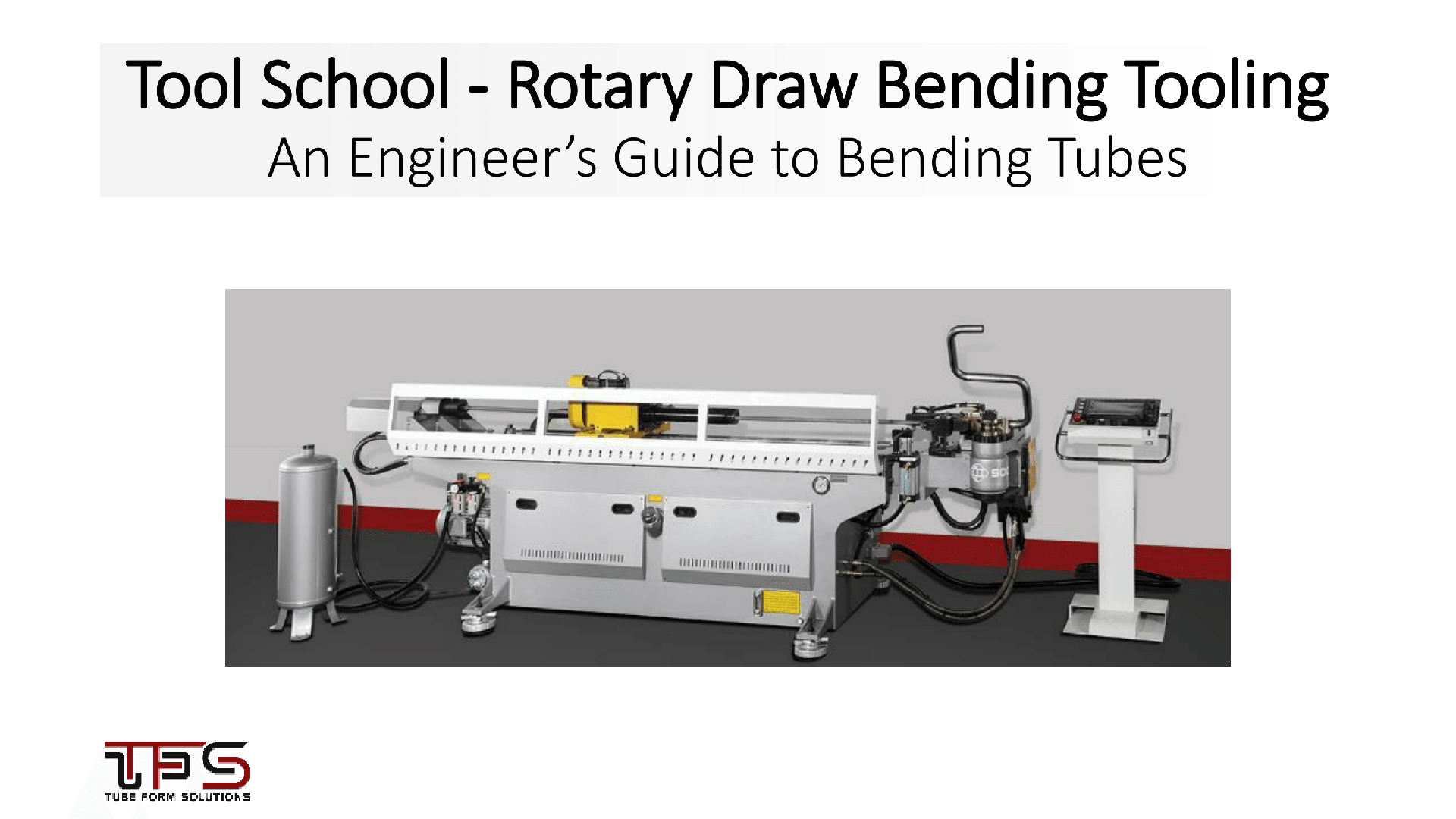
Rotary Draw Bending in Brief
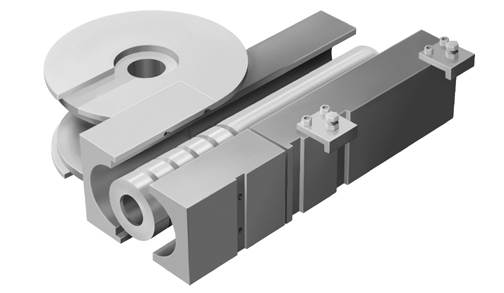
In rotary draw bending, the tube is clamped to a rotating bend die and pulled around it while a pressure die supports the straight side. For tight bends or thin walls, a mandrel supports the inside of the tube and a wiper die prevents wrinkling at the inside of the bend. The five basic tooling components are the bend die, clamp die, pressure die, wiper die and mandrel, explained in The 5 Basic Bending Tooling Components.
Key Engineering Questions the Guide Covers
- Centerline radius (CLR): usually stated as a multiple of the tube OD, such as 1.5D or 2D. Tighter radii are harder on the tube.
- Wall thickness and material: thin walls and harder materials need more support.
- Straight length between bends: the clamp needs a minimum straight section to hold the tube.
- Tooling material and finish: affects wear and surface marks. See tooling material considerations.
Tools to Go With the Guide
- Tube bending formulas for bend allowance and cut length
- Free tube tools and calculators
- Tube bending tooling from TFS
- Free part review from our applications team
Frequently Asked Questions
What is rotary draw bending?
A bending method where tube is clamped to a rotating die and drawn around it, producing precise, repeatable bends with a defined radius.
When do I need a mandrel?
When the radius is tight or the wall is thin enough that the tube would flatten or wrinkle without internal support.